
Microplastics and Health: What We Know — and What Comes Next
Microplastics are no longer only an environmental issue. They are increasingly becoming a public health question.
A recent article published by the European Commission’s Horizon Magazine explores how EU-funded researchers are racing to understand the health risks of microplastics — particles now found in the air we breathe, the water we drink, and the food we eat. The article highlights an important message: exposure is widespread, but many questions about long-term health effects remain unanswered.
Read the full article here: Scientists race to understand the health risks of microplastics | Horizon Magazine
For UPRISE, this message is highly relevant.
A growing concern: invisible particles, everyday exposure
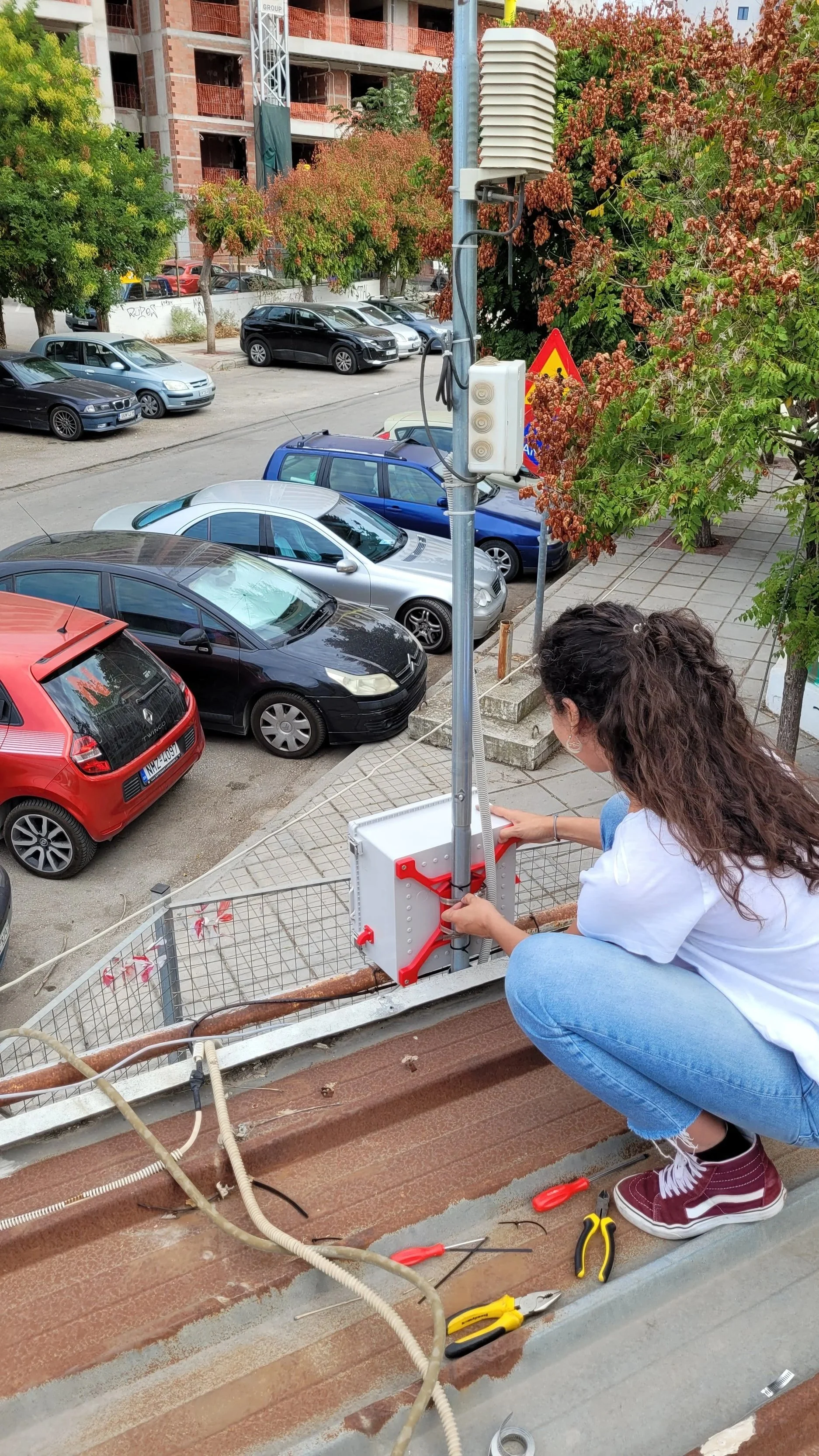
In 2025 September, ITENE research centre has successfully launched the installation of monitoring devices to track nanoparticles and micronanoplastics (MNPs). The first installations were carried out in Thessaloniki (Greece) and Hasselt (Belgium), marking an important milestone in the UPRISE project’s research activities.
Micro- and nanoplastics are tiny plastic particles that come from many sources, including tyre wear, synthetic materials, plastic waste, and the breakdown of larger plastic items. Because they are so small, they can spread through the environment and become part of the air we breathe.
The Horizon Magazine article describes how EU-funded projects such as POLYRISK, PLASTICHEAL, and PlasticsFatEare working to understand how these particles enter the body, how they interact with cells, and what their long-term effects might be.
One key takeaway is clear: we are constantly exposed — but we still don’t fully understand what that means for our health over time.
What we know — and what we still need to understand
Research so far suggests that micro- and nanoplastics may:
trigger inflammation or cellular stress
interact with the immune system
carry other pollutants into the body (the so-called “Trojan horse effect”)
At the same time, major knowledge gaps remain:
How much plastic do we actually absorb?
Which particles are most harmful?
What happens after years of repeated exposure?
Which populations are most vulnerable?
As highlighted in the article, even measuring exposure is still a challenge. These particles are extremely small and difficult to detect in the environment and in the human body.
Where UPRISE comes in
This is exactly where UPRISE builds on and extends existing research.
While many studies look at general exposure and health effects, UPRISE focuses on a particularly sensitive window of life: pregnancy and early development.
The project investigates:
how airborne micro- and nanoplastics and ultrafine particles are inhaled
whether they can reach the placenta
how they may affect maternal and fetal health
and whether they contribute to adverse birth outcomes, such as preterm birth
In other words, UPRISE helps answer a crucial question:
What do these invisible exposures mean at the very beginning of life?
Why pregnancy matters

The Horizon article points out that certain groups may be more vulnerable to exposure. UPRISE takes this further by focusing on one of the most critical stages of human development.
During pregnancy, even small environmental changes can influence how organs develop, how biological systems function, and how health evolves later in life.
Understanding exposure during this period is essential — not only for immediate pregnancy outcomes, but also for long-term health across the lifespan.
From uncertainty to action
A strong message from the European Commission article is that uncertainty should not delay action.
Even without complete answers, researchers already see enough evidence to justify concern and further investigation. This aligns closely with the mission of UPRISE.
By combining:
exposure assessment
clinical research
advanced laboratory models
and molecular analysis
UPRISE contributes to building the evidence needed to support:
better public health protection
stronger environmental policies
and more informed decision-making
Working together to close the gaps
The Horizon Magazine article highlights the importance of collaboration across EU-funded projects. UPRISE is part of this broader effort, contributing its unique focus on airborne exposure and early-life health.
Together, these projects are building a more complete picture:
from how microplastics enter the environment
to how they move through the body
to what they may mean for health

The UPRISE team was proud to take part in the ExpoHealthNet (EHN) Kick-off event (2025 September).
The two-day meeting brought together seven pioneering Horizon Europe projects - MARKOPOLO, ENACT, ENVESOME, ExpoSignalz, EXPOSIM, ClimAIr, and UPRISE - to begin a collaborative journey focused on how environmental factors influence non-communicable diseases.
Looking ahead
Microplastics are a relatively new research field in terms of human health. Many questions remain — but progress is happening quickly.
UPRISE is part of the next phase of this work, moving from general awareness to targeted understanding, especially for vulnerable populations.
Because ultimately, the goal is not only to understand risk — but to prevent it.