
Clean Air Day 2026: Why Clean Air Is More Complex Than a Blue Sky
On September 7, 2026, the International Day of Clean Air for blue skies reminds us of something that is simple to say, but complex to achieve: clean air is essential for human health, the environment, and future generations.
Air pollution is often imagined as something visible. Brown haze over a city, smoke from a factory, or smog on a busy road. But as the UN Environment Programme recently highlighted, understanding air pollution goes far beyond a simple “brown sky is bad, blue sky is good” logic.
A clear sky does not always mean clean air.
Many of the pollutants that matter most for health are invisible. Fine particulate matter, nitrogen dioxide, ground-level ozone, ultrafine particles, and other airborne substances cannot always be seen or smelled, yet they can affect the air people breathe every day.
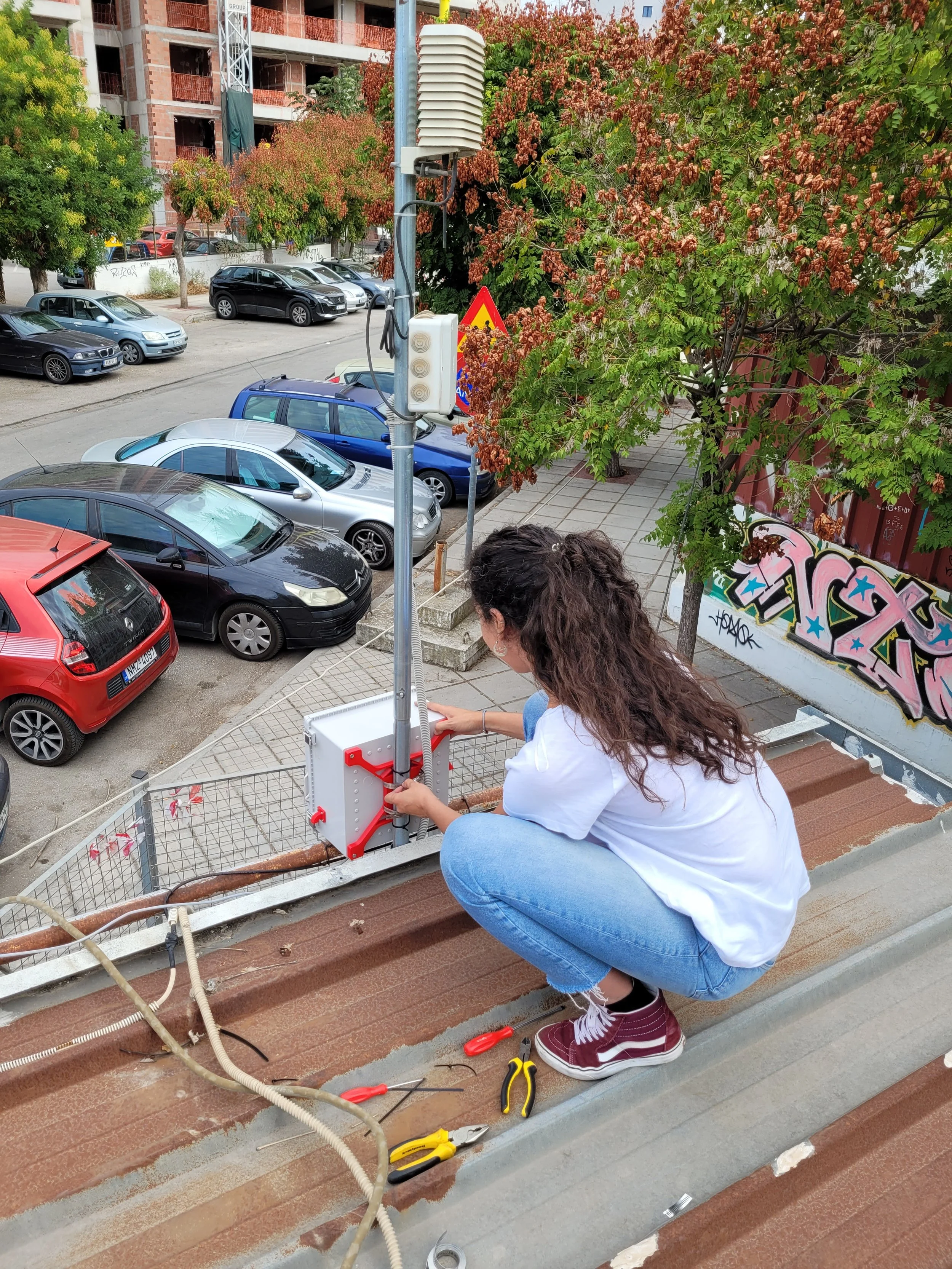
UPRISE monitoring devices in pilot cities, launched by ITENE research center (2025 September)
Understanding what is in the air
Air pollution includes liquid, solid, and gaseous particles that change the natural atmosphere and may harm human and planetary health. Some pollutants are emitted directly into the air, for example from traffic, industry, household stoves, wildfires, or waste burning. Others form in the atmosphere through chemical reactions involving sunlight, water vapor, and other gases.
Commonly monitored pollutants include fine particulate matter, such as PM2.5 and PM10, nitrogen dioxide, ground-level ozone, sulfur dioxide, and carbon monoxide. Some of these pollutants can travel deep into the lungs, enter the bloodstream, or contribute to broader health risks.
The picture becomes even more complex when we consider emerging pollutants such as ultrafine particles and micro- and nanoplastics. These are often too small to detect without specialized methods, but they are central to the research questions UPRISE is working to address.
Why exposure matters
One important concept in air pollution research is exposure: the amount of contact a person has with a pollutant, including how much they breathe in, how often, and for how long.
This is why air quality cannot be understood only by looking outside or checking whether the sky appears clear. People’s exposure depends on where they live, work, travel, and spend time. It can also differ between outdoor and indoor environments.
For UPRISE, this is especially relevant because the project investigates how exposure to tiny airborne pollutants, including ultrafine particles and micro- and nanoplastics, may affect pregnancy, fetal development, and early-life health. These are sensitive stages of life, where better understanding of environmental risks may help support earlier prevention and stronger public health protection.
Air quality differs across European cities
The European Environment Agency’s European city air quality ranking, published in July 2026, shows why measuring and comparing air quality remains so important. The tool presents data for 761 European cities and ranks them according to the combined mortality risk associated with long-term exposure to three key pollutants: PM2.5, nitrogen dioxide, and ground-level ozone.
This approach provides a more comprehensive picture of air quality in urban areas by looking not only at pollutant concentrations, but also at population exposure and associated health risks.
The ranking also shows that, although air quality in Europe has improved over recent decades, air pollution still poses risks to human health in most European cities. It highlights how air quality can vary between places and how different pollutants may contribute to health impacts in different ways.
Making invisible risks visible
Both the UNEP glossary and the EEA city ranking point to the same key message: clean air is not only about what we can see.
To protect health, we need reliable data, clear definitions, monitoring, modeling, and evidence-based policies. We also need to communicate complex air pollution concepts in ways that are understandable and useful for the public, policymakers, healthcare professionals, and communities.
This is closely aligned with the mission of UPRISE: making invisible risks visible.
By combining environmental monitoring, health data, laboratory research, and interdisciplinary expertise, UPRISE aims to better understand how tiny airborne pollutants may affect health from the earliest stages of life. The project focuses particularly on ultrafine particles and micro- and nanoplastics, two types of pollutants that remain difficult to see, measure, and fully understand.
From awareness to prevention
Clean Air Day is an opportunity to raise awareness, but also to look ahead. Understanding air pollution is not only a scientific challenge; it is a public health priority.
Better evidence can support smarter environmental and urban policy, clearer public health recommendations, and stronger prevention strategies. It can also help identify which groups may be more vulnerable to exposure and where action is most urgently needed.
For UPRISE, the message is clear: the more we understand the invisible risks in the air around us, the better we can protect pregnant women, babies, families, and future generations.
Clean air starts with visibility - not only in the sky, but in the evidence we build, the risks we recognize, and the actions we take.