
Zero Pollution in Europe: Why the EU’s Ambition Matters for Health and Future Generations
The European Union has set an ambitious goal: to reduce pollution in air, water, and soil to levels that are no longer harmful to human health or the environment. This vision lies at the heart of the EU Zero Pollution Action Plan, a key pillar of the European Green Deal - and one that closely aligns with the mission of the UPRISE research project.
Pollution as a major health challenge
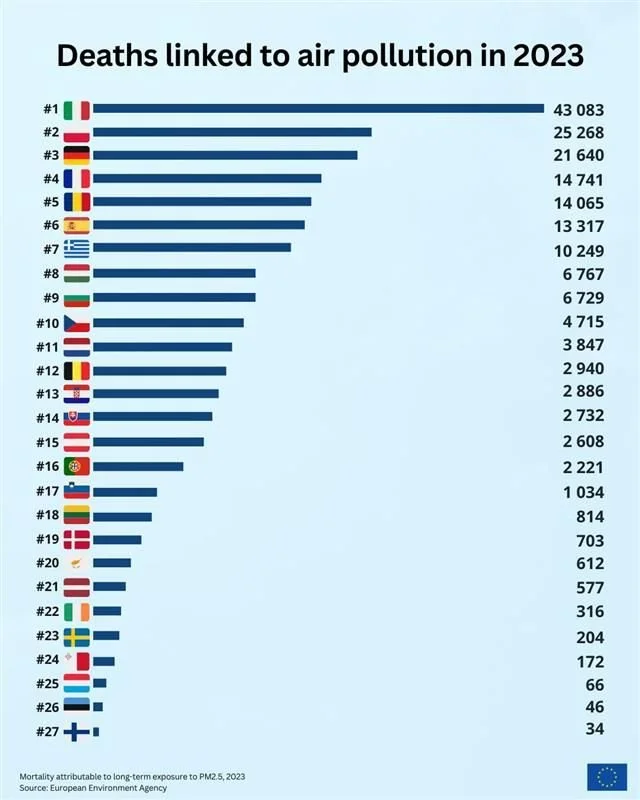
Pollution remains one of the largest environmental causes of disease and premature death in Europe, with particularly serious impacts on vulnerable populations, including children, people with underlying health conditions, and older adults. Air pollution alone is linked to a wide range of health problems, from cardiovascular and respiratory diseases to cancer and neurological conditions.
Beyond human health, pollution also damages ecosystems, reduces biodiversity, and weakens the ability of nature to provide essential services such as carbon storage and natural detoxification. Together, these impacts make pollution not only an environmental issue, but also a public health, social, and economic challenge.
Source: European Environment Agency
The EU Zero Pollution Action Plan
In May 2021, the European Commission adopted the Zero Pollution Action Plan: Towards Zero Pollution for Air, Water and Soil, setting a long-term vision for 2050: a toxic-free environment that respects the planet’s limits and protects both people and nature.
To move towards this goal, the Action Plan defines a set of 2030 targets, including:
Reducing premature deaths caused by air pollution by 55%
Cutting plastic litter at sea by 50% and reducing microplastics released into the environment by 30%
Improving soil quality by reducing nutrient losses and pesticide use by 50%
Reducing the share of ecosystems threatened by air pollution by 25%
Lowering the number of people chronically disturbed by transport noise by 30%
Significantly reducing waste generation and halving residual municipal waste
The Action Plan also aims to integrate pollution prevention across EU policies, strengthen existing legislation, and support innovation, investment, and international cooperation.
A renewed focus in 2026
At the end of January, 2026, the European Commission published the Mid-Term Review of the Zero Pollution Action Plan, taking stock of progress so far and outlining next steps. The review builds on the latest scientific evidence from the Second Zero Pollution Monitoring and Outlook (2025), which assesses pollution trends and evaluates whether the EU is on track to meet its 2030 targets.
The review highlights that achieving zero pollution will require not only strong policies, but also:
Robust scientific evidence
Effective implementation and governance
Continued innovation and investment
Close cooperation across sectors and borders
Why this matters for UPRISE
The Zero Pollution Action Plan sends a clear message: science must guide action. This is where UPRISE plays a crucial role.
UPRISE investigates how ultrafine particles (UFPs) and micro- and nanoplastics (MNPs) - pollutants specifically addressed in the Action Plan - may affect health at the very beginning of life. By focusing on pregnancy, fetal development, and early-life exposure, UPRISE helps fill critical knowledge gaps about how pollution impacts health long before disease becomes visible.
Understanding these early exposures is essential to:
Prevent long-term health effects
Protect vulnerable populations
Support evidence-based air quality and pollution policies
Contribute to the EU’s zero pollution goals
Copyright: European Commission
From ambition to protection
The EU’s zero pollution ambition reflects a growing recognition that preventing pollution is one of the most effective ways to protect health, ecosystems, and future generations. Research projects like UPRISE contribute to this effort by providing the scientific evidence needed to turn policy goals into meaningful, protective action.
As Europe works towards cleaner air, water, and soil, UPRISE remains committed to making invisible risks visible - and to supporting a future where children can grow up in healthier environments from the very start of life.